SATYA
SWAYAM SEVI SANSTHA

Society for Advancement, Training & Youth Awareness
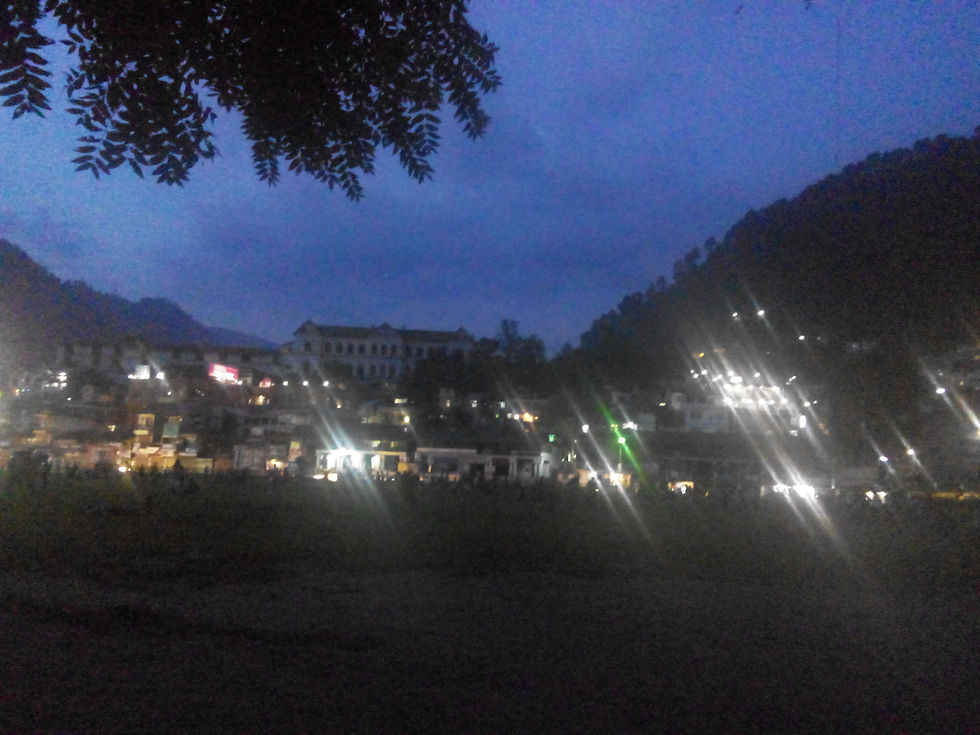
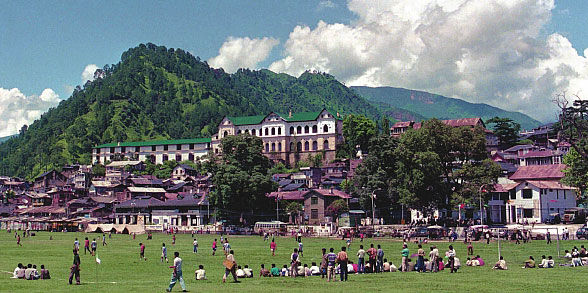
Chamba is an ancient town in the Chamba district in the state of Himachal Pradesh, in northern India. According to the 2001 Indian census, Chamba has a population of 20,312 people.[1] Located at an altitude of 996 metres (3,268 ft) above mean sea level, the town is situated on the banks of the Ravi River (a major tributary of the Trans-Himalayan Indus River), at its confluence with the Sal River.
Though historical records date the history of the Chamba region to the Kolian tribes in the 2nd century BC, the area was formally ruled by the Maru dynasty, starting with the Raju Maru from around 500 AD, ruling from the ancient capital of Bharmour, which is located 75 kilometres (47 mi) from the town of Chamba.[2] In 920, Raja Sahil Varman (or Raja Sahil Verma) shifted the capital of the kingdom to Chamba, following the specific request of his daughter Champavati [3] (Chamba was named after her). From the time of Raju Maru, 67 Rajas of this dynasty have ruled over Chamba until it finally merged with the Indian Union in April 1948, although Chamba was under British suzerainty from 1846 to this time.
The town has numerous temples and palaces, and hosts two popular jatras (fairs), the "Suhi Mata Mela" and the "Minjar Mela", which last for several days and involve music and dancing. Chamba is also well noted for its arts and crafts, particularly its Pahari paintings, which originated in the Hill Kingdoms of North India between the 17th and 19th century and its handicrafts and textiles to the Wix Blog!
Chamba is a Municipal Council city in district of Chamba, Himachal Pradesh. The Chamba city is divided into 11 wards for which elections are held every 5 years. The Chamba Municipal Council has population of 19,933 of which 9,971 are males while 9,962 are females as per report released by Census India 2011.
Population of Children with age of 0-6 is 1864 which is 9.35 % of total population of Chamba (M Cl). In Chamba Municipal Council, Female Sex Ratio is of 999 against state average of 972. Moreover Child Sex Ratio in Chamba is around 944 compared to Himachal Pradesh state average of 909. Literacy rate of Chamba city is 91.76 % higher than state average of 82.80 %. In Chamba, Male literacy is around 94.85 % while female literacy rate is 88.68 %.
Chamba Municipal Council has total administration over 4,556 houses to which it supplies basic amenities like water and sewerage. It is also authorize to build roads within Municipal Council limits and impose taxes on properties coming under its jurisdiction.
Schedule Caste (SC) constitutes 21.48 % while Schedule Tribe (ST) were 5.51 % of total population in Chamba (M Cl).
Out of total population, 6,830 were engaged in work or business activity. Of this 5,056 were males while 1,774 were females. In census survey, worker is defined as person who does business, job, service, and cultivator and labour activity. Of total 6830 working population, 85.56 % were engaged in Main Work while 14.44 % of total workers were engaged in Marginal Work.
Chamba Town Committee
Designation Name Address Contact No.
President
Vice President
General Secretary
Joint Secretary
Cashier
Press Secretary
Chief Advisor
Youth Co-Ordinator
Member
Ward Name Total Household Total Population Child Sex Ratio APL/BPL
DHAROG
SAPRI
SURARA
HATNALA
CHOWGAN
JULAKARI
HARDASPURA
MUGLA
KASAKRA
MAI KA BAGH
OBRI